


What is the maximum tilt angle of a projector on a stand wall?
As a supplier of Projector Stand Wall, I often receive questions from customers about the technical specifications of our products. One of the most frequently asked questions is about the maximum tilt angle of a projector when it is mounted on a stand wall. In this blog post, I will delve into this topic and provide you with a comprehensive understanding of the factors that influence the maximum tilt angle and its implications.
Understanding the Basics of Projector Tilt Angle
The tilt angle of a projector refers to the degree to which the projector can be tilted vertically or horizontally when it is installed on a stand wall. This adjustment is crucial as it allows users to achieve the best possible projection image on the screen. A proper tilt angle ensures that the projected image is square, without any distortion such as keystoning, and is centered correctly on the screen.
The maximum tilt angle is determined by the design and engineering of the projector stand wall. Different models of stand walls offer different ranges of tilt angles, which can vary significantly depending on the intended use and the type of projector.
Factors Influencing the Maximum Tilt Angle
1. Projector Design
The physical design of the projector itself plays a significant role in determining the maximum tilt angle. Some projectors are designed with a more flexible mounting system, which allows for a wider range of tilt angles. For example, high - end projectors often come with advanced mounting mechanisms that can accommodate larger tilt angles to provide more installation flexibility. On the other hand, smaller, more compact projectors may have limitations due to their internal components and the way they are constructed.
2. Stand Wall Construction
The construction of the projector stand wall is another crucial factor. A well - engineered stand wall is designed to provide stable support for the projector while allowing for a sufficient range of motion. The materials used in the stand wall, such as the strength of the metal or the durability of the plastic components, can affect how much tilt the stand can safely accommodate. A sturdier stand wall can generally support a larger tilt angle without compromising the stability of the projector.
3. Optical Considerations
The optical system of the projector also has an impact on the maximum tilt angle. When a projector is tilted, the light path changes, which can lead to issues such as uneven brightness, color distortion, or loss of focus. Manufacturers take these optical considerations into account when determining the maximum tilt angle that will still provide an acceptable image quality. For instance, some projectors have built - in lens shift capabilities that can compensate for minor tilts, allowing for a slightly larger tilt angle without significant image degradation.
Typical Ranges of Maximum Tilt Angles
In general, the maximum vertical tilt angle of a projector on a stand wall can range from about 10 to 30 degrees, while the horizontal tilt angle can range from 5 to 20 degrees. However, these are just rough estimates, and the actual values can vary widely depending on the factors mentioned above.
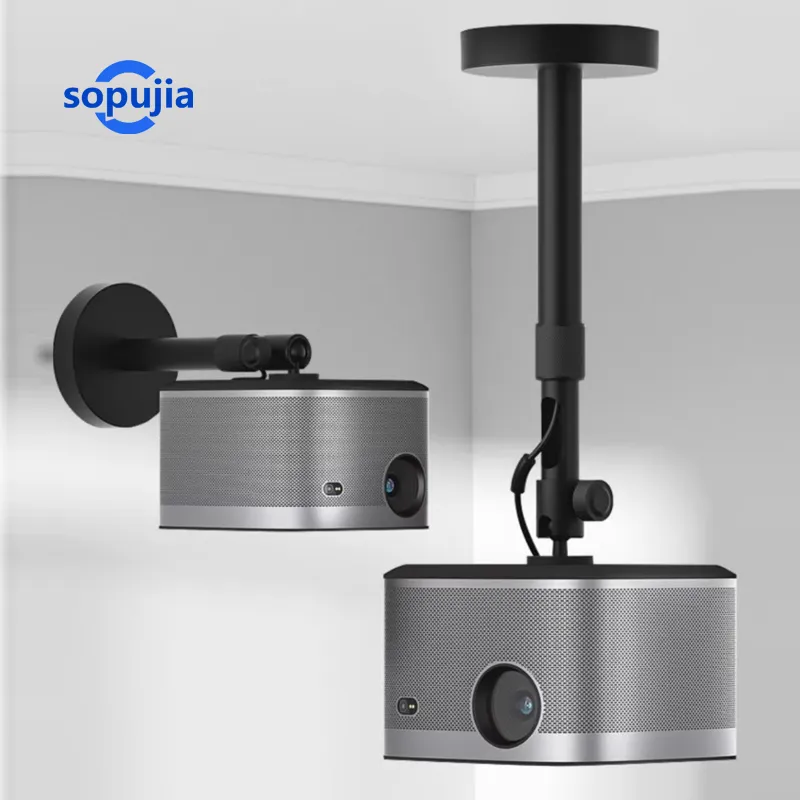
For example, a basic Mini Projector Wall Mount may have a relatively limited tilt angle range, perhaps around 10 - 15 degrees vertically and 5 - 10 degrees horizontally. This is because mini projectors are often more compact and have less advanced mounting systems.
On the other hand, a high - end Laser TV Ceiling Mount may offer a much wider range of tilt angles. These mounts are designed for larger, more sophisticated projectors and can sometimes provide a vertical tilt angle of up to 30 degrees and a horizontal tilt angle of 20 degrees.
Implications of the Maximum Tilt Angle
1. Installation Flexibility
A larger maximum tilt angle provides greater installation flexibility. It allows installers to place the projector in various locations on the stand wall and still achieve a proper projection on the screen. This is particularly useful in spaces with limited room or non - standard layouts. For example, in a small home theater where the projector needs to be installed at an angle to avoid obstructions, a stand wall with a large tilt angle can make the installation possible.
2. Image Quality
As mentioned earlier, exceeding the maximum tilt angle can lead to image quality issues. Keystoning, where the projected image appears trapezoidal instead of rectangular, is a common problem when the tilt angle is too large. Additionally, there may be issues with focus, brightness uniformity, and color accuracy. Therefore, it is essential to stay within the recommended maximum tilt angle to ensure the best possible image quality.
3. Safety
Over - tilting the projector can also pose a safety risk. If the tilt angle exceeds the capacity of the stand wall, the projector may become unstable and could potentially fall, causing damage to the projector and posing a danger to people and objects in the vicinity. It is crucial to follow the manufacturer's guidelines regarding the maximum tilt angle to ensure safe operation.
Choosing the Right Projector Stand Wall Based on Tilt Angle Requirements
When selecting a projector stand wall, it is important to consider your specific tilt angle requirements. If you need to install the projector in a location that requires a large tilt angle, such as in a corner or at an unusual height, you should look for a stand wall that offers a wide range of tilt angles.
On the other hand, if you have a standard installation where the projector can be mounted directly in front of the screen with minimal tilt, a stand wall with a more limited tilt angle range may be sufficient. You should also consider the type of projector you have and ensure that the stand wall is compatible with its size, weight, and mounting requirements.
Conclusion
The maximum tilt angle of a projector on a stand wall is an important factor that affects installation flexibility, image quality, and safety. As a supplier of Projector Stand Wall, we understand the diverse needs of our customers and offer a wide range of products with different tilt angle capabilities. Whether you are looking for a Floor - standing Projector Cart for a portable setup or a dedicated wall mount for a permanent installation, we have the right solution for you.
If you have any questions about the maximum tilt angle or need help selecting the appropriate projector stand wall for your needs, please feel free to contact us. Our team of experts is ready to assist you in making the best choice for your projector installation.
References
- Projector Installation Manuals from Various Manufacturers
- Technical Papers on Projector Optics and Mounting Systems


